
The SEQ Elevate project continues to advance its mission through a series of Virtual Collaboration Forums, bringing together stakeholders and young people across Europe to collaboratively develop solutions that strengthen social and emotional skills among NEET youth.
During the last two months, a couple of national discussion forums were successfully organized with stakeholders and NEET you from Germany dn Cyprus, contributing valuable insights to the project’s co-creation process. This marked a critical phase for the project, as these forums served as concept validation spaces and moments of reflection on the initial methodology and first developed outputs, including the General Transnational Report, the SEQ Learning Model Framework, and the Validation Methodology Framework.
💬 Key Insights from the German Forum: Engaging Stakeholders and Youth in Dialogue
On 24 February 2026, the project coordinator Pro Arbeit – Kreis Offenbach – (AöR) – Kommunales Jobcenter hosted the first Virtual Collaboration Forum, engaging NEET youth and relevant stakeholders in a constructive exchange.
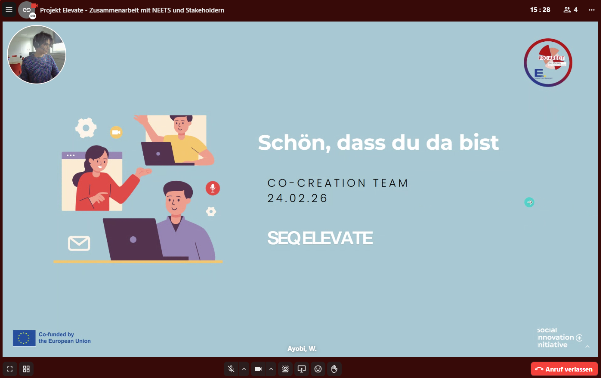
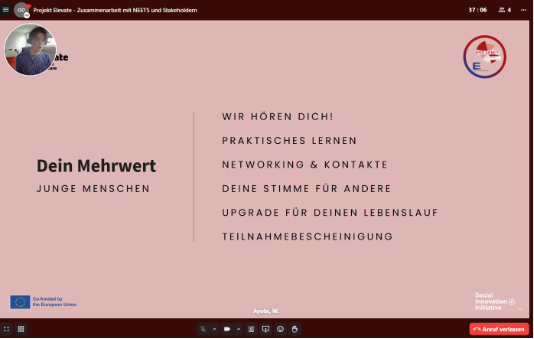
Participants were introduced to the project’s initial outputs, including the Transnational Research Report and the SEQ Learning Model Framework, and were invited to reflect on their relevance. The discussion offered meaningful insights into the everyday realities of young people not in employment, education, or training, helping to ensure that future project developments are grounded in real experiences.
As the first in a series of national consultation activities, the forum set the basis for continuous stakeholder involvement and iterative improvement of project results.
🧩 Reflections from the Cypriot Forum: Enhancing Inclusion of NEET Migrant Youth through Co-Creation
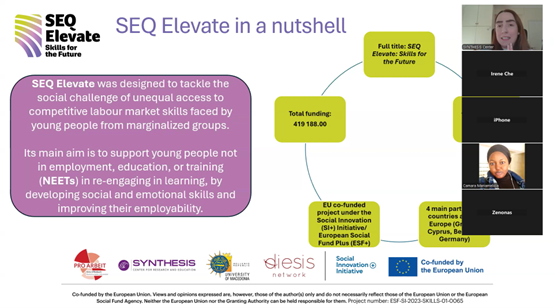
On 30 March 2026, SYNTHESIS Center for Research & Education organised an engaging Virtual Collaboration Forum, bringing together Cypriot social economy stakeholders and migrant NEET youth in a dynamic and interactive setting.
The session fostered open dialogue, reflection, and collaboration, building on the project’s research findings and supporting the further development of its learning and validation approaches. Participants were introduced to key insights related to skills gaps, employability needs, barriers to employment, and stakeholders’ perspectives on recruitment and validation practices, alongside an overview of the SEQ Learning Model Framework.
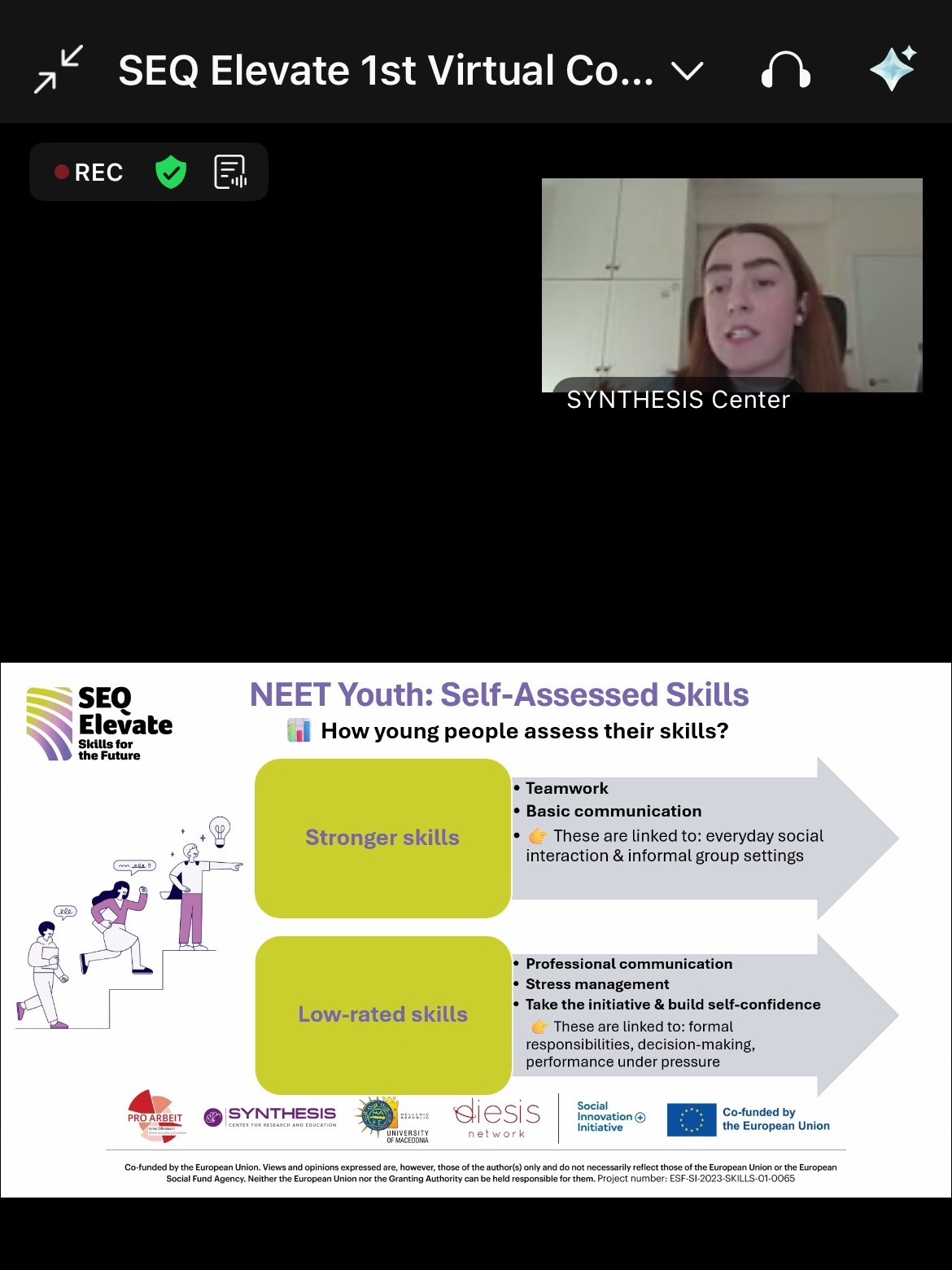
The discussion confirmed the importance of focusing on social and emotional skills, such as communication, teamwork, adaptability, and confidence, as essential drivers of employability. At the same time, it highlighted specific challenges faced by migrant NEET youth, including language barriers, cultural differences, and limited access to guidance and support systems.
💡 Key Takeaways from Participants
The feedback gathered through both forums provides important guidance for refining the project’s results and strengthening its co-creation and inclusive approach in the upcoming phases. Participants emphasised that future activities—particularly the development of the Digital gamified learning tool and the implementation of Living Labs in each country—should be designed in ways that are accessible, practical, and closely aligned with the real needs of NEET youth. The discussions highlighted the importance of culturally sensitive approaches, as well as the need to prioritise practice-based learning that supports confidence-building for NEET youth’s employability through real-life situations. At the same time, participants underlined the value of combining digital solutions with mentoring support and stressed the importance of clear and fair validation methods based on observable behaviour. Ensuring that micro-credentials and other forms of skills recognition are meaningful and trusted by employers was also identified as a key priority. Overall, these insights reinforce the need for solutions that are not only innovative, but also usable, inclusive, and grounded in real-life experiences.
🔄 Translating Insights into Action
The shared feedback and solutions provided by participants of both labour market area and NEET youth community will directly contribute to the refinement of key SEQ Elevate outputs, including the Transnational Research Report, the SEQ Learning Model Framework, and the Validation Methodology Framework.
By integrating real-life experiences and stakeholder perspectives, the project ensures that its results remain practical, inclusive, and aligned with labour market needs.
A Continuous Co-Design Journey
The Virtual Collaboration Forums are a core element of SEQ Elevate’s co-creation strategy, ensuring continuous dialogue with NEET youth and social economy stakeholders throughout the project’s lifespan. This ongoing consultation process will follow with more topic-specific Virtual Collaboration Forums in the next months with focus both on refining key project components—such as digital tools and training content that the consortium is currently developing—and on preparing for the implementation of pilot activities under the Living Labs. Through this structured and iterative process, SEQ Elevate aims to ensure that its outputs are continuously improved and closely aligned with real user needs and labour market realities.